When I first came to Second Life, I thought living in some kind of community would be a lovely idea. You know the sort of place: people living near each other, casually becoming friends, everybody pleasantly social, probably sharing tips, stories, and the occasional bit of harmless neighbourly gossip. At the time, I was very much looking to connect and find friends.
Sadly, that did not really work out for me at all.
Instead of instant belonging and meaningful pixel bonding, I mostly learned that forcing people into the same area does not automatically create warmth, friendship, or even basic social chemistry.
So in the end, I bought a parcel on Mainland, and honestly, that turned out to be one of my best Second Life decisions. I have lived there happily since 2009. Which probably says a lot about me, my social skills, and my deep appreciation for having my own little bit of land where nobody expects me to join a group activity against my will.
Still, the experience did teach me something useful: Second Life is full of social spaces, social circles, communities, friend groups, and yes, cliques. Some are wonderful. Some are deeply weird. Some are warm and welcoming. Others feel like you accidentally walked into the cafeteria scene of a teen film, except everybody is wearing impossible hair and pretending not to look at you.
Yep, Second Life is a wonderful, strange, slightly unhinged place.
It is where people build dream homes, fall in love, start arguments over absolutely nothing, buy fatpacks of 20 dresses in 25 colours, and somehow end up in a two-hour conversation about virtual landscaping. It is creative, social, chaotic, funny, and occasionally powered by pure nonsense.
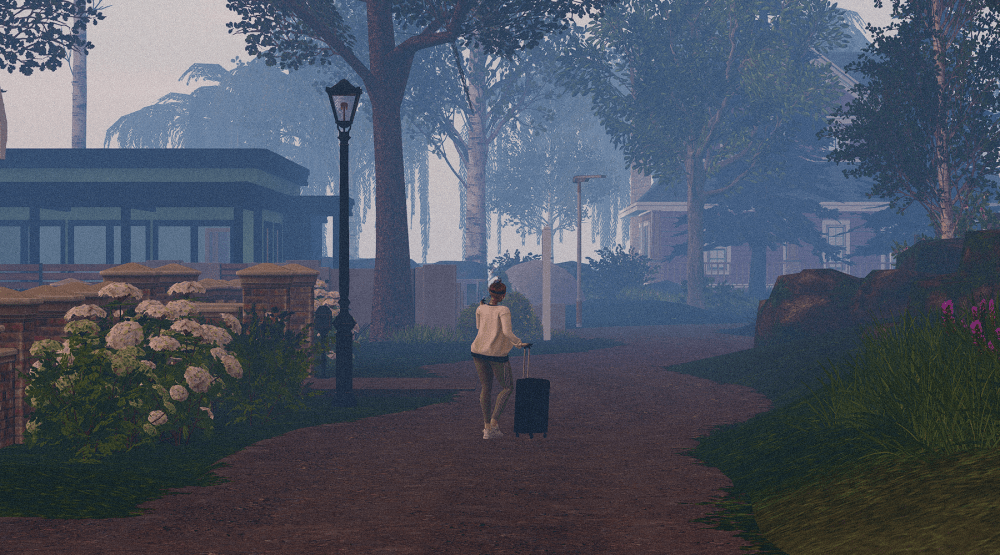
And because it is full of people, it is also full of cliques.
Now, before anyone starts dramatically adjusting their mesh pearls and saying, “I am not in a clique, we are just a close group of friends who all happen to dislike the same people for completely unrelated reasons,” let us be honest: cliques are everywhere in Second Life. Clubs have them. Art scenes have them. Bloggers have them. Roleplay sims have them. Shopping circles have them. Breedable people probably have them too, though I imagine theirs come with a suspicious amount of spreadsheets.
Cliques are not always bad. But when they are bad, they are usually very bad in that deeply silly, very online, nobody involved is getting paid enough for this kind of way.
What is a clique, really?
A clique is not just a group of friends.
A clique is a close little circle with a strong sense of who belongs, who does not, and who is currently being looked at like they tracked mud over the expensive carpet. Sometimes this is obvious. More often, it is subtle. A certain silence when you arrive. A private joke that lands like a locked door. A social atmosphere that says, you may stand near us, but emotionally, please remain behind the rope.
And yes, that can happen in a virtual world where people are dressed as woodland fairies, cyberpunk gangsters, supermodels, or shirtless vampires with excellent eyebrows.
Cliques usually start in a perfectly normal way. People make friends. They spend time together. They develop shared jokes, habits, and history. That part is completely natural. Honestly, it would be weird if it did not happen.
The problem starts when a friend group stops being a circle and starts acting like a private club with bad customer service.
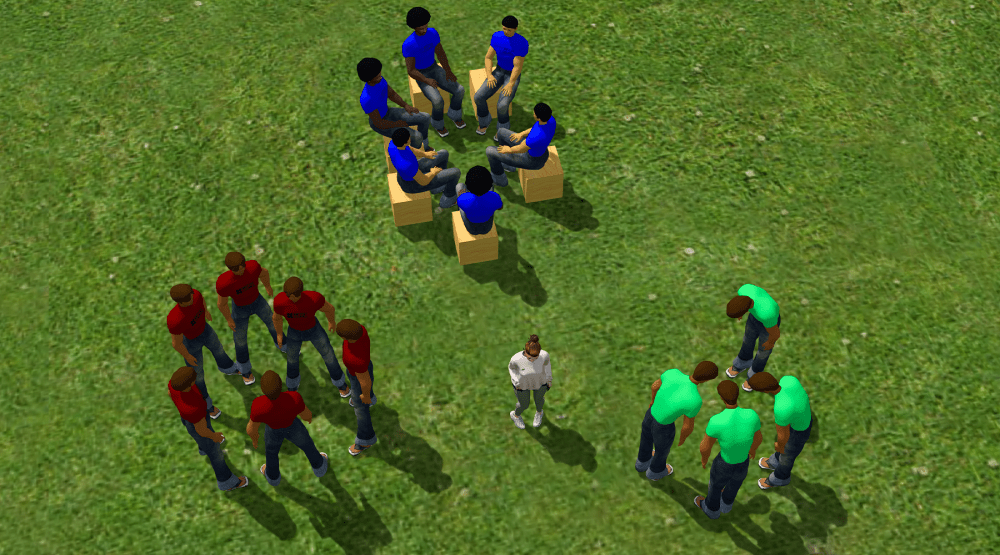
The good side: some cliques are just… people liking each other
Very rude of me to admit this, but it is true.
Sometimes what looks like a clique from the outside is simply a close, long-term group of friends. They know each other well, they trust each other, and they enjoy spending time together. In a world as big and random as Second Life, that kind of circle can be a really lovely thing.
A good close-knit group can make Second Life feel less overwhelming. It gives people somewhere to land. Somewhere familiar. Somewhere they can show up in yesterday’s outfit, terrible tattoos and all, and still feel welcome.
These are the groups that support each other, encourage each other, show up for each other’s events, share landmarks, help with tech disasters, and gently explain for the sixth time why you are floating two centimeters above the floor.
That is not toxic. That is friendship.
And frankly, in a world where many interactions are fleeting, weird, or interrupted by region crossings, real friendship deserves some respect.
The bad side: when friendship turns into social nonsense
Ah yes. Here we are.
The ugly version of a clique is less about friendship and more about status, control, and exclusion. It is not enough to be friends. No, now the group must also be seen, recognised, admired and feared, ideally. Preferably while standing in a fashionable cluster near the landing point, looking as if they are deeply unimpressed by everything and everyone.
This is where it starts getting nasty.
A nasty clique often bonds through exclusion. They gossip. They freeze people out. They do the vague-posting thing. They have favourite people and rotating villains. They make social approval feel like a prize, which is wild when you think about it, because the prize is usually just access to more people saying slightly mean things in local chat.
Some groups become weird little kingdoms. Everybody knows who the favourites are. Everybody knows who is “in.” Everybody knows who used to be in and is now being discussed in private messages like a fallen royal. It is exhausting, childish, and somehow always treated like Very Serious Business.
And the truly amazing part is that all of this can happen while everybody involved is wearing glitter, horns, or a ball gown.

Why some cliques turn nasty
Usually, because insecurity has entered the chat.
People who feel uncertain about their own place sometimes create a sense of power by making other people feel less secure. It is a cheap trick, but an old one. Excluding someone else can make insecure people feel important. Gossip can make them feel connected. Being “in the know” can feel like value, even when the thing they know is just who muted whom after a mediocre argument three years ago.
There is also the issue of scarcity thinking. In some Second Life circles, people behave as if friendship, attention, popularity, event invitations, Flickr and Primfeed likes, or social relevance are rare luxury goods. So when somebody new appears, instead of thinking oh nice, a new person, they think this is a threat to the throne.
And sometimes, people are simply bored.
Never underestimate what bored residents can do with too much time, too little perspective, and a Wi-Fi connection. Entire dramas have been built out of less.
Why some cliques are actually cool
Because not every close group is a tiny social dictatorship.
The good ones are secure enough not to act threatened by every new face. They may be close, but they are not cruel. They may have history, but they do not use it as a weapon. They do not make other people jump through hoops for basic friendliness. They do not behave as if talking to someone outside the group is a betrayal of the crown.
A healthy close circle does not need outsiders to feel small in order to feel special.
That is really the whole thing.
Some groups are fun to be around exactly because they are relaxed. They can laugh at themselves. They can welcome new people without acting like they are conducting interviews for an elite social society. They do not need to make friendship look scarce to make it feel valuable.
Those are the good ones. Hold onto them.
Cliques and communities are not the same thing, even if they sometimes look alike
This is where things get tricky, because from the outside they can look very similar.
Both communities and cliques can have regulars, inside jokes, shared tastes, familiar names, and a sense of history. Walk into any established Second Life scene and there is a fair chance you will feel like everyone else already knows the plot.
But the difference is important.
A community is built around shared participation. Maybe it is a music venue, an art space, a roleplay sim, a blogging scene, a support group, a shopping event, or a hobby. The focus is the shared interest or shared place. People may know each other well, but there is room for others to join over time.
A clique is built around the inner circle itself. The focus is not the activity. The focus is who belongs.
Communities make space. Cliques protect territory.
And yes, communities can absolutely contain cliques. In fact, many do. Give any Second Life scene enough time, and it will eventually develop little inner courts, favourite people, mysterious politics, and at least one person who says they hate drama while somehow being near every single piece of it.

Why you should be careful
Because virtual worlds still contain real feelings.
People sometimes act as if drama in Second Life does not count because it happens through avatars, screens, and private messages typed with too much confidence. But social behaviour online can still hurt. Being ignored, mocked, frozen out, or talked about behind your back still feels rotten, even when the person doing it is technically a fox in platform boots.
So yes, be careful.
Pay attention to how groups behave. Not just when things are fun, but when things get awkward. How do they talk about people who are not there? What happens when somebody disagrees? Can people move in and out naturally, or does everything feel strangely controlled? Are you allowed to be yourself, or are you quietly being trained to become whatever the group rewards?
And maybe most importantly: watch what happens when somebody falls out of favour.
That is usually where the masks slip.
Also, do not build your whole Second Life around one social circle too fast. Have more than one place to go. More than one friend. More than one corner of the grid where you feel comfortable. Social monoculture is risky. If one little kingdom decides you are no longer fashionable, you do not want that to take your whole Second Life down with it.
Diversify your pixels!
Why you should not worry too much
Because not every group of friends is a hostile empire.
Sometimes people are just shy. Sometimes they are distracted. Sometimes they are mid-conversation, half-afk, buried in IMs, chatting in Discord, fixing their outfit, and generally functioning with the social awareness of a potted plant. Not every quiet reception means you are being judged. Not every inside joke is an attack. Not every established group is plotting your exclusion like a mini royal court.
And also, many cliques have far less power than they imagine.
This is one of the most freeing things to remember in Second Life: somebody can be extremely important in one very specific scene and still be completely irrelevant everywhere else. Their “status” often works only as long as people around them agree to treat it as real.
You do not need every group to like you. You do not need access to every inner circle. You do not need to spend your precious time trying to impress people whose entire personality is selective friendliness.
Sometimes the healthiest, most elegant response is to shrug, teleport out, and go find better company.
A few signs you may be dealing with a clique rather than a community
A few classic warning signs:
- You arrive, and the conversation suddenly dies.
- People are polite, but in that tight, careful way that makes you feel like a suspicious package.
- The group says they are “drama-free,” which in Second Life often means the drama is simply happening in a private channel with better punctuation.
- Gossip seems to be one of the main shared hobbies.
- Approval feels conditional.
- Disagreement is treated like betrayal.
- You leave feeling smaller than when you arrived.
That last one is the big one.
Because the details vary, but the feeling usually tells the truth.
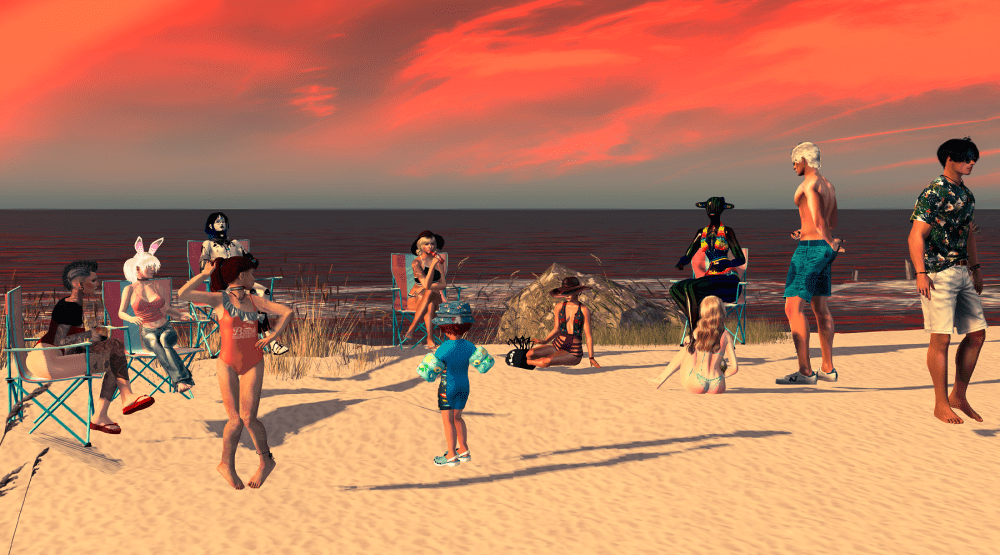
My two cents
Cliques are not going away. Wherever people gather, smaller groups will form. Some of those groups will be kind, supportive, funny little homes. Some will be guarded social fortresses. Some will be full-blown theatre productions disguised as friendships.
The trick is not to avoid every close-knit group. That would be impossible, and a bit lonely. The trick is learning to tell the difference between warmth and gatekeeping, between friendship and performance, between a real community and a tiny kingdom with a dress code.
Find the people who are kind when nobody is watching. Find the groups that do not make you feel like you have to shrink to fit in. Find the ones who can laugh at themselves and make space for others.
Those are usually the good ones.
And if you do stumble into one of Second Life’s less charming social courts, remember this: the grid is huge, the world is weird, and there is almost always a better crowd somewhere else.
Teleport accordingly.


Hi Cait! I am one of your loyal lurkers, but I wanted to just say how much I enjoyed and can relate to this article! ♥ Well written!
LikeLike
ooh thank you so much!
LikeLike